
How is it possible for two inventors to separately have the same idea and then submit patent paperwork for it on the very same day without knowing about each other's progress? Or for two mathematicians in two different countries to arrive at the same theorem independently?
History is littered with hundreds of examples like these; the same idea, theory, or invention occurring to more than one person at around the same time, often without them being aware of each other. Is this merely coincidence, or is something bigger at play and what does it allow us to glimpse?
The Spirit of the Times
Ideas are products of their time. Each new idea, theory, or discovery is a reflection of the period it emerged from, its mood, spirit, and memes that define it.
That spirit emerges from what is being read, argued, prioritised, and ignored by a culture. It forms from and reinforces the shared corpus of knowledge, understanding, and assumptions that shapes people's lives. The result is a collective source of shared experiences and thoughts that shape individuals living through that period.
It is these environmental conditions that lead to the same ideas arriving in multiple places at once. A need becomes pressing, and the understanding required to address it is mature enough for more than one mind to reach for it. The collective experience is the primordial soup that allows for new connections to form. Anyone paying attention can participate in making that happen.
Having studied these types of cases over many decades, sociologist Robert Merton observed that almost every major discovery has two or more people arriving at almost identical findings around the same time. He argued that it was the solo breakthroughs that were the anomaly. It's almost as if technological progress and invention is an emergent property of culture, appearing in many different pockets at the same time.
"The future is already here – it's just not evenly distributed."
William Gibson
Standing on the Shoulders of Giants
Stuart Kauffman termed this as the Adjacent Possible. What is possible to discover or invent is entirely determined by what has already been discovered or invented. A new molecule can only form from the available catalysts, one reaction away. Each new reaction widens the tree of possibility and what can happen next.
Ideas evolve in much the same way, taking what is already possible and building on it to create something new. This is how the same source materials can seed similar ideas in separate minds without those individuals ever entering each other's spheres.
A book about population gave both Alfred Russel Wallace and Charles Darwin the same framework for understanding how species change over time. Recalling the moment he first read the book, Darwin wrote, “Here, then, I had at last got a theory by which to work.”
And it's not just ideas that can seed new possibilities, technology can be a similar catalyst. The sampler is a great example of this. It opened the possibility for new sounds to be remixed from beats, lyrics, and riffs that already existed. Hip hop emerged from this technology; sampling and remixing until recombination became an art form in its own right. The craft was curating which samples belonged together, what mattered and why.
Being inspired by and building on what already exists has been something we've always done, it's intrinsic to our spirit as a species. As Kirby Ferguson puts it, Everything is a Remix.
The Perspective You Bring
Elaborating what already exists into something new requires a curator. Someone has to notice the thread and make the connection. That doesn't happen on its own.
The connections we make depend greatly on our lived experiences, our values, and the particular problems we just happen to be mulling over. It is the details we notice that allows for connections to occur to us and maybe not someone else that doesn't have our background.
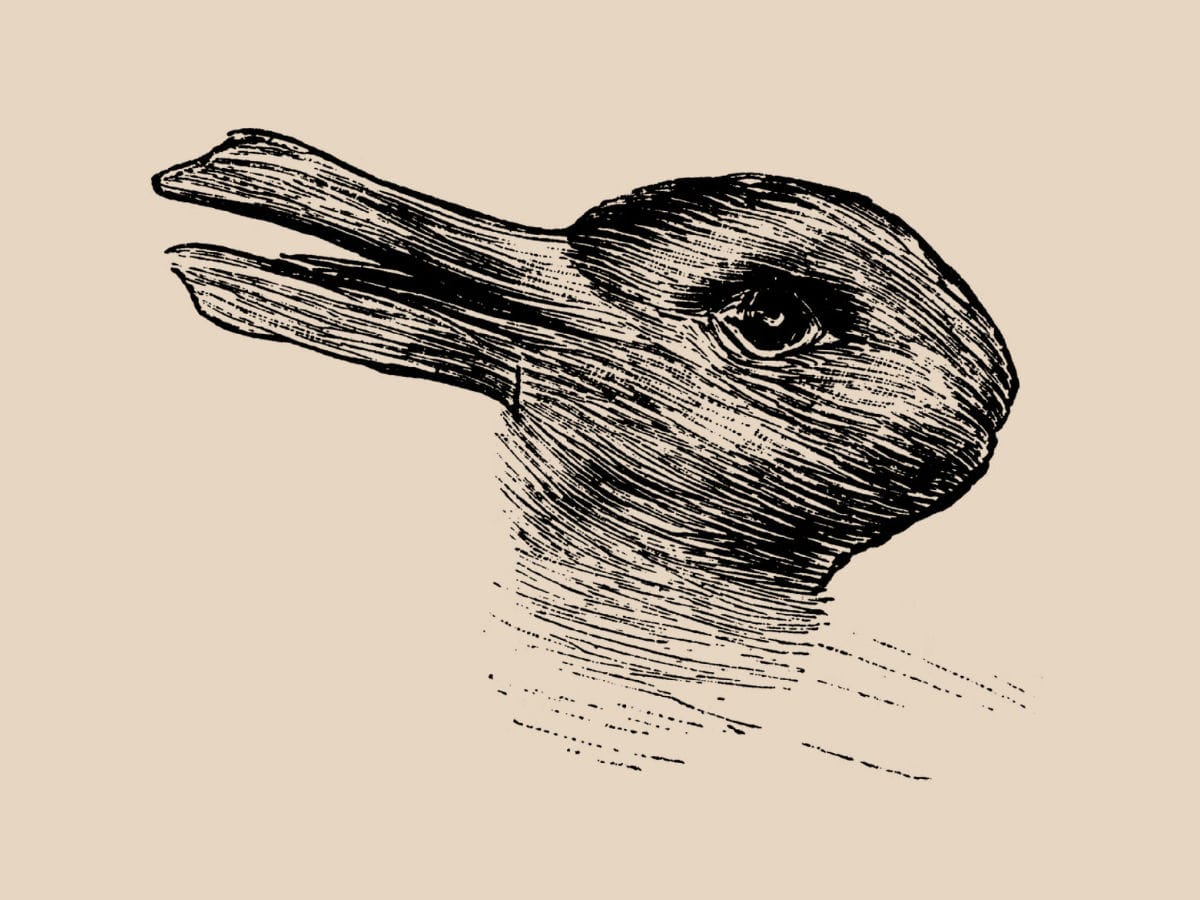
A nurse learning about a new fabric might see a bandage while a designer will see a fashion collection. Interpretation is completely subjective. Two people can have the same experience and walk away with two completely different recollections of what happened. We're constantly filtering our reality through what we already know and understand.
Kauffman's theory explains what is possible but realising it still requires an individual to make the connection and do something about it.
The Distance Between Fields
Innovations often emerge from connections between seemingly disparate ideas. Cross-pollination and mapping of one domain's frameworks onto another has impelled many of history's greatest breakthroughs. The challenge is cultivating the environment for ideas to make the crossing, often requiring time, access, and someone able to translate between them.
Every domain having its own nomenclature, corpus of knowledge, and specialised way of reasoning creates a distance between them. Getting an idea from one domain into another used to require domain-expertise across both or a serendipitous encounter between practitioners.
Large Language Models (LLMs) are collapsing that distance; it is now easier than ever before to cross-pollinate ideas across domains. Mapping knowledge between fields seems to be an inherent strength of these models. Their ability to predict the next most likely word in a correlated statistical sub-region of the model makes them extraordinary tools for drawing out the knowledge necessary to make those new connections.
But they still need a critical thinker to steer them, someone to pull the thread, curate what matters, and ponder the connection.
The surface area of the adjacent possible is greater than it has ever been before; what are you going to reach for?